


Description
Overview
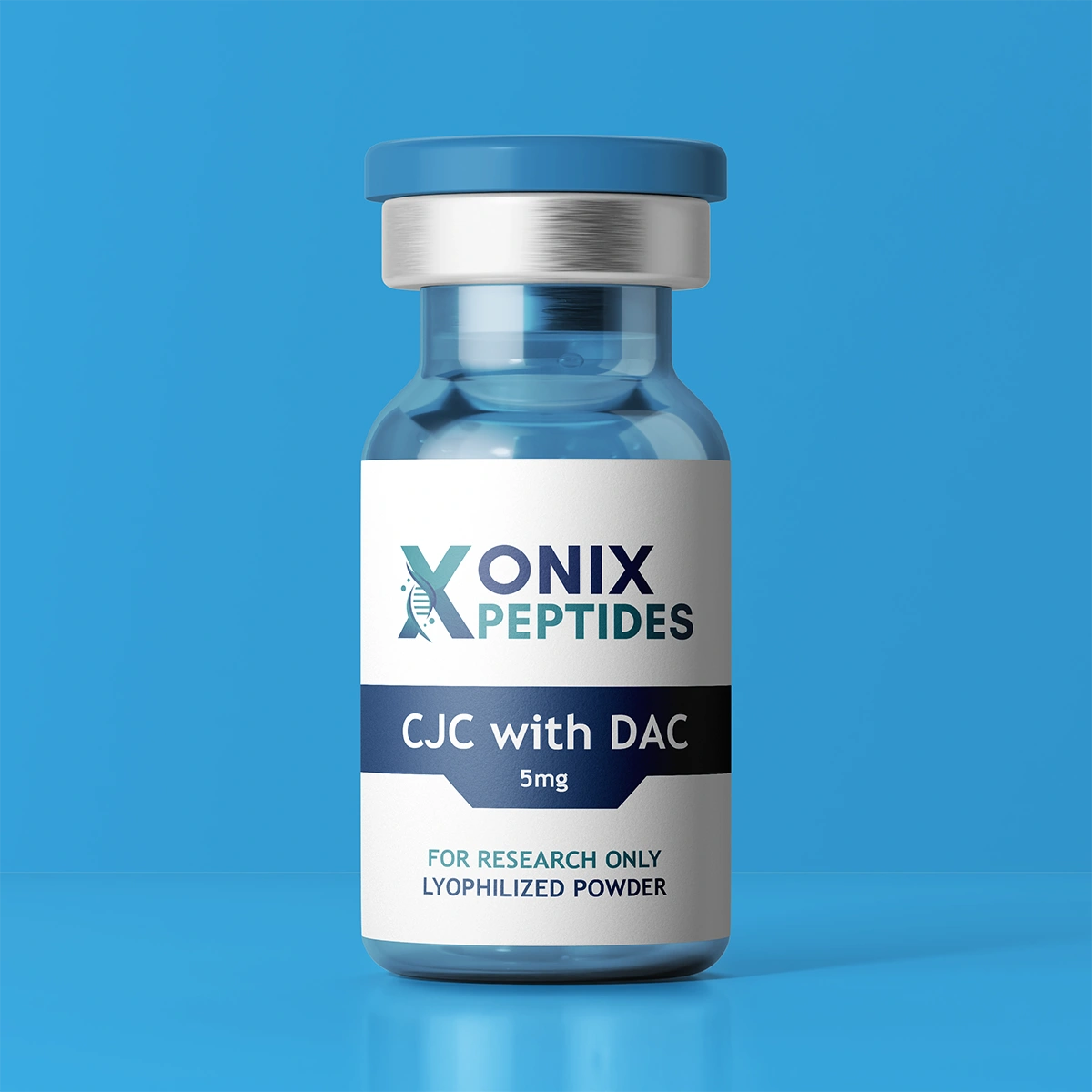
CJC-1295 with DAC 5mg is a synthetic peptide compound characterized in scientific and preclinical literature as a modified growth hormone–releasing hormone (GHRH) analog incorporating a Drug Affinity Complex (DAC) designed to extend circulatory stability in research models. This structural modification differentiates it from non-DAC variants and has been examined exclusively within controlled experimental and analytical laboratory environments. Published references involving CJC-1295 with DAC are limited to non-clinical research settings, where investigation centers on prolonged half-life behavior, receptor-binding kinetics, growth hormone signaling cascades, and sustained secretion modeling frameworks. Laboratory studies frequently evaluate pharmacokinetic extension mechanisms, peptide–receptor interaction dynamics, and downstream pathway mapping at the molecular and cellular levels under structured in vitro and in vivo research conditions. All available findings associated with this material remain confined to investigational laboratory contexts. No claims or representations are made regarding therapeutic intent, clinical application, physiological outcomes, or suitability for human or veterinary use.
Biochemical Characteristics
CJC-1295 with DAC 5mg is a synthetic peptide research material classified in scientific literature as a modified growth hormone–releasing hormone (GHRH) analog incorporating a Drug Affinity Complex (DAC). This structural modification is designed to extend peptide stability in experimental models and is characterized exclusively through physicochemical analysis and controlled laboratory investigation. Biochemical evaluation of CJC-1295 with DAC focuses on molecular sequence verification, structural conformation analysis, receptor-binding kinetics, and extended stability profiling under controlled research conditions. Preclinical investigations commonly assess peptide persistence within analytical systems, interaction dynamics at target receptor sites, and downstream signaling pathway modeling within structured in vitro and in vivo frameworks. All characterization and evaluation remain confined to investigational, analytical, and non-clinical research environments. No application, claim, or representation extends beyond laboratory-based examination.
Molecular Class: Synthetic GHRH analog (DAC-modified) research peptide
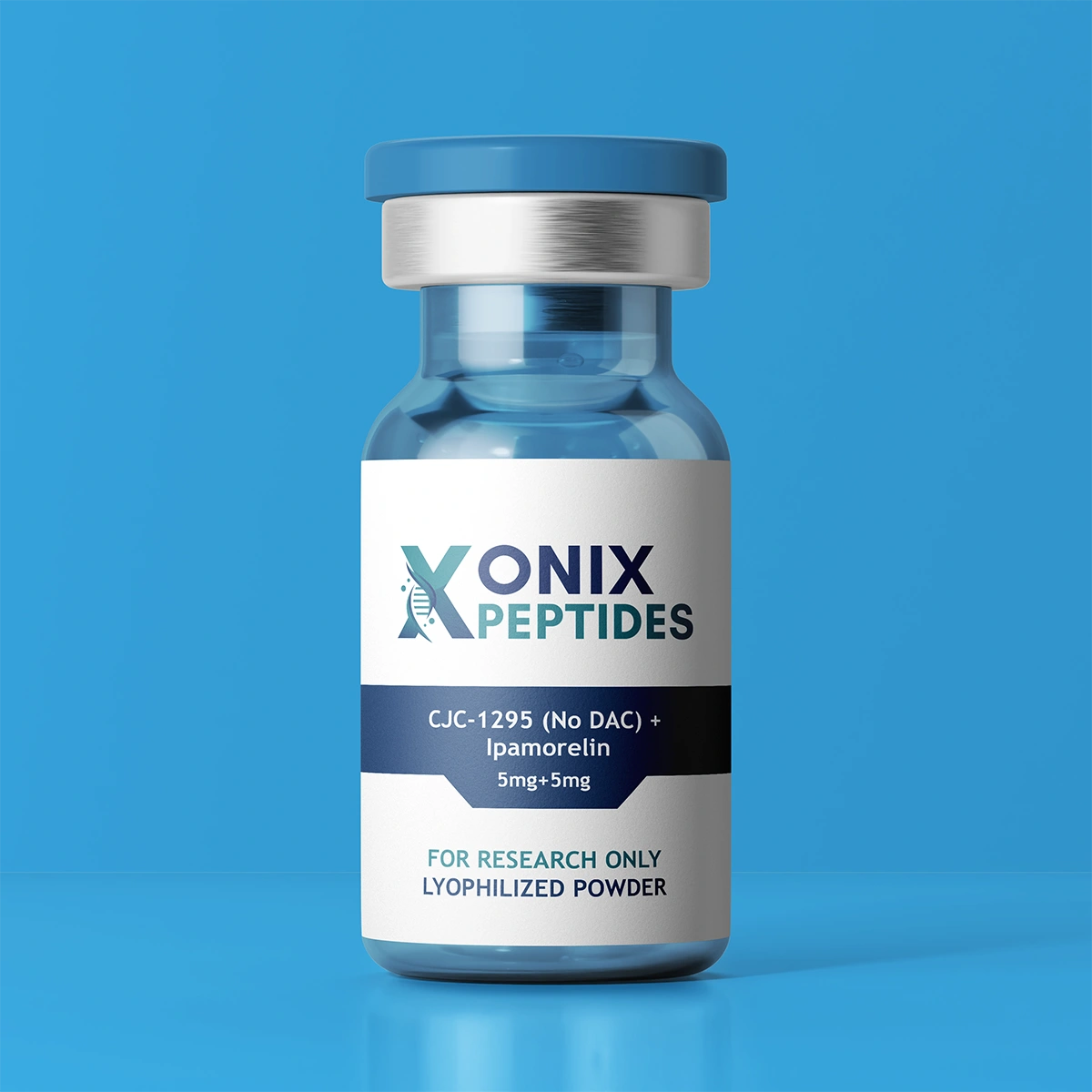
Net Content: 5 mg per vial
Purity: Research-grade, high-purity peptide
Material State: Lyophilized powder
Intended Use: Laboratory research only
Research Applications
In scientific and preclinical literature, CJC-1295 with DAC 5mg is described as a synthetic peptide research compound evaluated exclusively within controlled, non-clinical laboratory environments. Its role in research is limited to analytical characterization, pharmacokinetic modeling, and mechanistic pathway investigation conducted under structured experimental conditions. Molecular signaling and pathway analysis involving growth hormone–associated regulatory systems Receptor-binding kinetics and interaction modeling within GHRH receptor frameworks Extended half-life and peptide stability assessment under controlled analytical conditions Structural integrity and solution-behavior evaluation during in vitro experimentation Comparative studies examining DAC-modified versus non-modified peptide characteristics in preclinical research models Analytical benchmarking within peptide-focused research workflows utilizing synthetic reference materials All referenced applications remain strictly confined to laboratory-based investigation and non-clinical experimental use. No claims are made regarding biological outcomes, therapeutic potential, clinical relevance, or applicability beyond structured research settings.
Pathway / Mechanistic Context
Within experimental and preclinical research literature, CJC-1295 with DAC 5mg is discussed in relation to peptide-mediated signaling systems evaluated at the molecular and receptor-interaction level. These frameworks are examined exclusively in controlled laboratory environments to support structured analysis of peptide stability, receptor engagement, and extended activity modeling under defined experimental conditions. Scientific references involving CJC-1295 with DAC commonly address growth hormone–releasing hormone (GHRH) receptor–associated signaling pathways, with particular attention to how DAC modification influences circulatory persistence and binding kinetics in research models. Mechanistic discussions in laboratory settings often include receptor-binding affinity analysis, downstream signaling cascade mapping, sustained exposure modeling, and structural conformation assessment within analytical systems. All mechanistic interpretations remain observational and exploratory in nature and are strictly confined to non-clinical research contexts. No representations extend beyond controlled experimental environments, and no claims are made regarding biological outcomes, clinical relevance, or applicability outside structured investigational settings.
Preclinical Research Summary
Preclinical research references describe observations associated with CJC-1295 with DAC derived from controlled experimental systems designed to evaluate synthetic peptide materials within non-clinical research frameworks. These investigations center on laboratory-based assessment of peptide structure, extended stability behavior, receptor interaction modeling, and signaling-pathway mapping under defined analytical conditions. Published exploratory studies reference evaluation of growth hormone–associated signaling environments, receptor-binding kinetics involving GHRH receptor systems, and sustained exposure modeling attributable to DAC modification. Additional analyses examine molecular integrity, circulatory persistence within experimental models, and peptide stability profiles across varying in vitro and preclinical research parameters. All documented observations remain confined to investigational, analytical, and preclinical laboratory settings and are presented solely for exploratory research purposes. No findings indicate clinical relevance, therapeutic intent, physiological application, or suitability for human or veterinary use. All references are limited strictly to controlled laboratory research environments.
Form & Analytical Testing
CJC-1295 with DAC 5mg is supplied as a synthetic peptide research material produced under controlled manufacturing standards to support batch consistency, structural integrity, and purity suitable for laboratory evaluation. The compound is provided in a lyophilized, stabilized format designed to facilitate accurate handling, reconstitution protocols within research settings, and structured analytical workflows. Material verification emphasizes physicochemical characterization and quality attributes relevant to synthetic peptide research applications. Analytical assessment procedures commonly include peptide identity confirmation, purity determination using validated chromatographic methodologies (such as HPLC), and batch-level consistency evaluation. Additional analytical techniques may involve mass spectrometry–based molecular weight verification and stability profiling conducted under defined storage and handling parameters. All testing and quality verification processes are performed exclusively to support material characterization within controlled, non-clinical laboratory research environments.
Referenced Citations
Teichman, S. L., et al. (2006). Prolonged stimulation of growth hormone (GH) and insulin-like growth factor I secretion by CJC-1295, a long-acting analog of growth hormone–releasing hormone. Journal of Clinical Endocrinology & Metabolism, 91(3), 799–805. Ionescu, M., et al. (2006). Pulsatile secretion of growth hormone persists during continuous stimulation by CJC-1295. Journal of Clinical Endocrinology & Metabolism, 91(12), 4792–4797. Raun, K., et al. (1998). Ipamorelin, the first selective growth hormone secretagogue: receptor selectivity and pharmacological profile. European Journal of Endocrinology, 139(5), 552–561. Bowers, C. Y., et al. (1990s). Structure-activity relationships of growth hormone secretagogues and receptor selectivity analysis. Endocrinology Research.
ALL ARTICLES AND PRODUCT INFORMATION PROVIDED ON THIS WEBSITE ARE FOR INFORMATIONAL AND EDUCATIONAL PURPOSES ONLY. FOR RESEARCH USE ONLY (RUO). NOT FOR HUMAN OR VETERINARY USE.
RUO Disclaimer
All products available on this website, including CJC-1295 with DAC 5mg, are supplied strictly for in vitro laboratory research purposes. In vitro research refers to experimental procedures conducted outside of living organisms within controlled laboratory environments designed for analytical and investigational study. These materials are not drugs, medications, dietary supplements, or medical products. They have not been evaluated or approved by the U.S. Food and Drug Administration (FDA) for the diagnosis, treatment, cure, or prevention of any disease or medical condition. Any use beyond structured laboratory research — including administration to humans or animals — is strictly prohibited. For Laboratory Research Use Only (RUO). Not for human use, medical use, diagnostic use, or veterinary use.
There are no reviews yet.