


Description
Overview
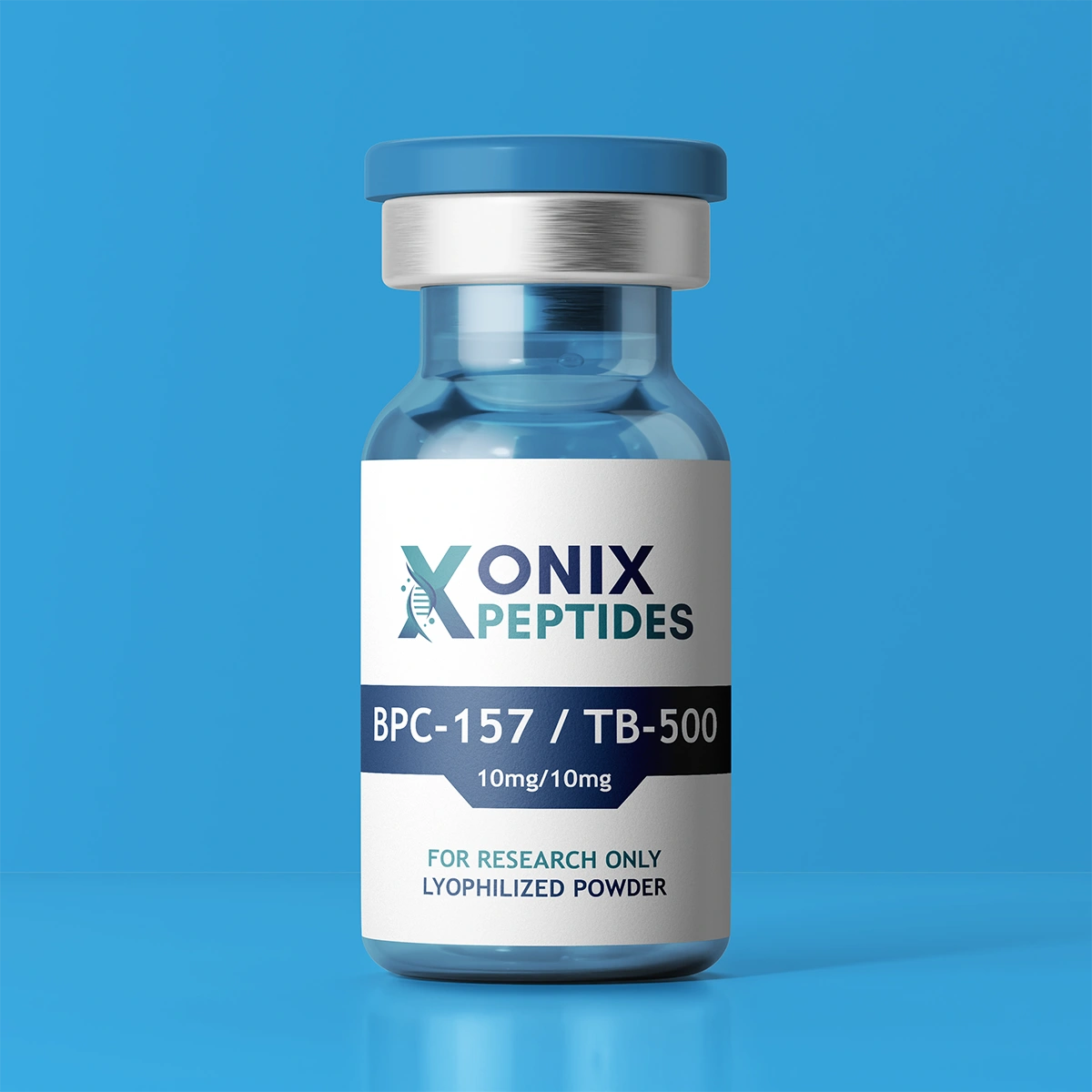
BPC-157 / TB-500 Blend is a synthetic peptide research material characterized in scientific and preclinical literature as a combined formulation of two peptides frequently examined in experimental research settings. Its properties and behavior are evaluated exclusively within controlled laboratory and analytical research environments. Published references involving BPC-157 and TB-500 confine their relevance to non-clinical research contexts, including molecular signaling analysis, tissue and cellular modeling, and experimental studies assessing peptide interactions under controlled conditions. All documented observations are limited to investigational and laboratory-based examination and do not extend beyond structured research settings. No representations or claims are made regarding therapeutic intent, clinical relevance, or suitability for human or veterinary use.
Biochemical Characteristics
BPC-157 / TB-500 Blend is a synthetic peptide research material described in scientific and preclinical literature as a combined formulation of two structurally distinct peptides evaluated within controlled laboratory environments. Its characterization is limited to physicochemical properties, molecular structure, and stability-focused investigation under non-clinical research conditions. Research involving BPC-157 and TB-500 centers on material-level and molecular analysis, including peptide integrity, signaling pathway interaction modeling, and experimental evaluation of peptide behavior in controlled systems. All documented evaluations are confined to investigational, analytical, and preclinical research models, with no application beyond laboratory-based examination.
Molecular Class: Synthetic peptide research material
Net Content: 10mg / 10mg
Purity: Research-grade, high-purity peptide blend
Material State: Lyophilized powder
Intended Use: Laboratory research only
Research Applications
In published scientific and preclinical literature, BPC-157 / TB-500 Blend is described as a synthetic peptide research material examined within controlled experimental systems under non-clinical laboratory conditions. Its role in research is limited to analytical, comparative, and observational study within structured investigational environments. Molecular signaling and pathway interaction analysis involving peptide-based systems Experimental evaluation of peptide stability and structural behavior under controlled conditions Comparative studies examining combined peptide interactions within in-vitro and preclinical models Tissue and cellular modeling frameworks assessing peptide-related molecular activity Analytical benchmarking in research workflows involving synthetic peptide reference materials All referenced applications are strictly confined to controlled laboratory research and non-clinical experimental use. No claims are made regarding biological outcomes, clinical relevance, or applicability outside of investigational research settings.
Pathway / Mechanistic Context
Within experimental and preclinical research literature, BPC-157 / TB-500 Blend is discussed in relation to peptide-mediated molecular signaling systems examined at the structural and interactional level. These systems are evaluated within controlled laboratory environments to support understanding of peptide behavior, molecular pathway engagement, and interaction dynamics under experimental conditions. Additional scientific references address peptide-associated signaling frameworks, structural stability considerations, and cooperative interaction modeling when multiple peptides are examined within the same experimental system. All mechanistic discussions remain observational and exploratory in nature and are strictly limited to non-clinical laboratory research environments. No interpretations extend beyond analytical research contexts, and no claims are made regarding biological outcomes, clinical relevance, or applicability outside controlled experimental systems.
Preclinical Research Summary
Preclinical research references discuss BPC-157 and TB-500–related observations derived from controlled experimental systems used to examine synthetic peptide materials within non-clinical research frameworks. These investigations focus on laboratory-based assessment of peptide structure, molecular interaction behavior, and stability characteristics under experimental conditions. Additional studies describe exploratory evaluation of peptide-associated signaling environments and interaction dynamics in preclinical models, including observations related to peptide integrity and comparative behavior when examined individually or in combination. All reported observations remain confined to preclinical, analytical, and investigational research settings and are presented solely for exploratory purposes. No findings suggest clinical relevance, therapeutic intent, or suitability for human or veterinary use. All references are limited to controlled laboratory research environments.
Form & Analytical Testing
BPC-157 / TB-500 Blend – 10mg / 10mg is supplied as a synthetic peptide research material manufactured under controlled conditions to support consistency, purity, and structural stability during laboratory handling and evaluation. The material is provided in a dry, stabilized state suitable for analytical and investigational research workflows. Material verification focuses on physicochemical and quality attributes relevant to synthetic peptide research materials. Analytical assessment includes confirmation of peptide identity, purity verification using chromatographic methods, and evaluation of material consistency across production batches. All testing is conducted solely to support material characterization and quality confirmation within controlled laboratory research settings.
Referenced Citations
Chang, C.-H., Tsai, W.-C., Lin, M.-S., Hsu, Y.-H., & Pang, J.-H. (2014). Pentadecapeptide BPC 157 enhances the expression of growth hormone receptor in tendon fibroblasts [Study on tendon fibroblast regulatory pathways]. Molecules, 19(11), 19066–19077. Rahman, O. F. (2026). Therapeutic peptides in orthopaedics: Applications, pathways, and tissue mechanisms [Review of TB-500 as thymosin beta-4 fragment in preclinical models]. JAAOS Global Research & Reviews. Liao, H. J. (2024). Peptides for targeting chondrogenic induction and joint health: Preclinical perspectives on BPC-157 and TB-500 [Review of peptide activity in connective tissue research]. PMC.
ALL ARTICLES AND PRODUCT INFORMATION PROVIDED ON THIS WEBSITE ARE FOR INFORMATIONAL AND EDUCATIONAL PURPOSES ONLY.
RUO Disclaimer
All products available on this website are supplied exclusively for in vitro laboratory research purposes. In vitro research refers to experimental studies conducted outside of living organisms within controlled laboratory environments. These materials are not drugs, medications, dietary supplements, or medical products and have not been evaluated or approved by the U.S. Food and Drug Administration (FDA) for the diagnosis, treatment, cure, or prevention of any disease or medical condition. Any use beyond controlled laboratory research, including introduction into humans or animals, is strictly prohibited. For Laboratory Research Use Only (RUO). Not for human use, medical use, diagnostic use, or veterinary use.
There are no reviews yet.