
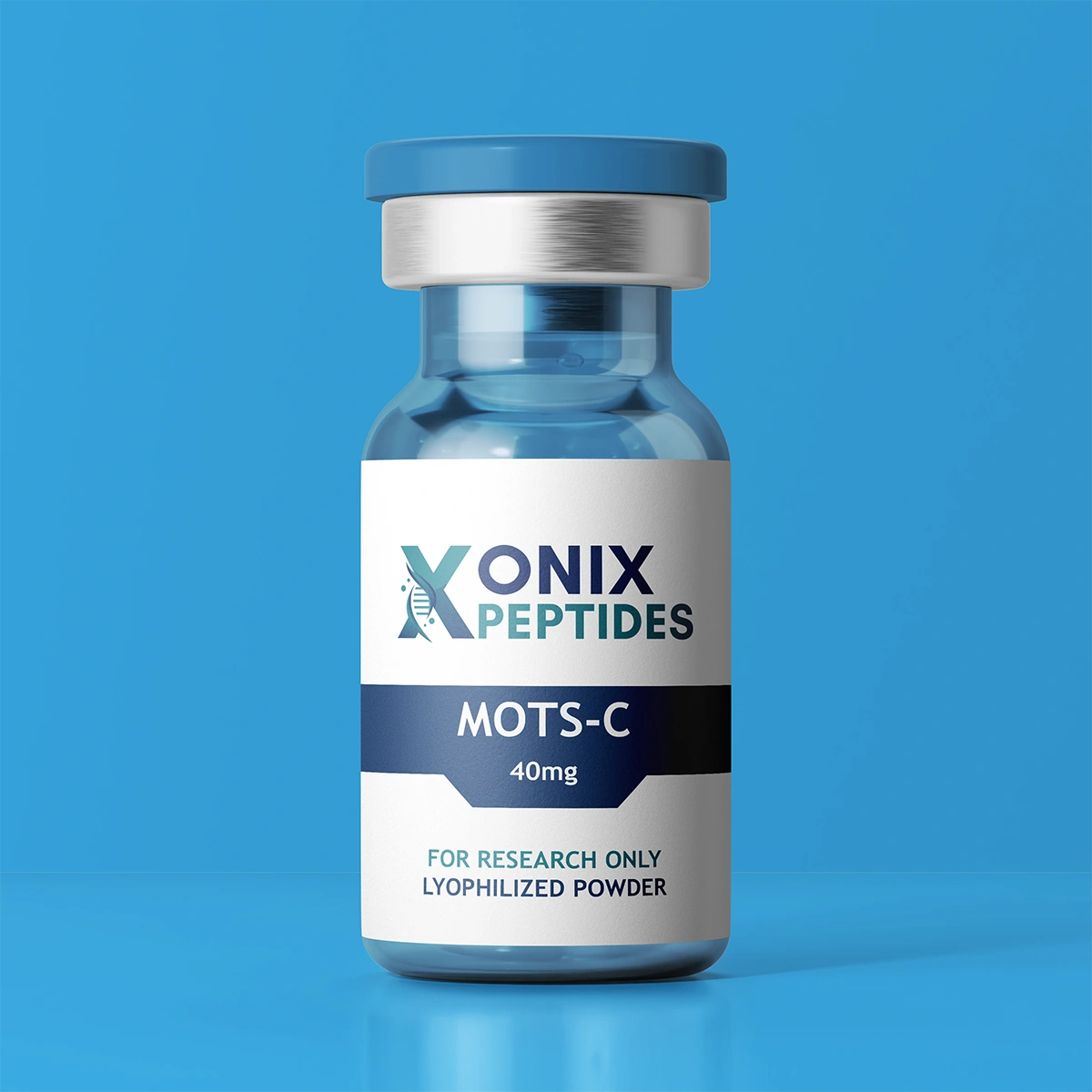


Description
MOTS-c
(Mitochondrial-Derived Peptide – Metabolic Regulation & Cellular Stress Response Modulator)
MOTS-c (Mitochondrial Open Reading Frame of the 12S rRNA-c) is a naturally occurring mitochondrial-derived peptide encoded within the mitochondrial genome. It belongs to a recently identified class of signaling peptides known as mitochondrial-derived peptides (MDPs) that function in metabolic regulation and cellular stress responses. Unlike most peptides encoded by nuclear DNA, MOTS-c originates from mitochondrial genetic material and participates in communication between mitochondria and the nucleus. Research has focused on its role in metabolic homeostasis, energy regulation, and adaptive responses to cellular stress. Experimental studies have investigated MOTS-c for its influence on pathways related to glucose metabolism, mitochondrial function, and cellular resilience to metabolic stress.
Mechanism of Action
(Based on Preclinical and Experimental Research)
Activation of metabolic stress signaling: MOTS-c has been shown to activate pathways associated with
AMP-Activated Protein Kinase (AMPK), a central regulator of cellular energy balance.
Nuclear translocation under stress conditions: Research indicates MOTS-c may translocate to the cell nucleus during metabolic stress, where it influences gene expression related to cellular adaptation.
Regulation of glucose metabolism: Experimental models suggest involvement in pathways that improve glucose utilization and metabolic efficiency.
Mitochondrial–nuclear communication: Acts as a signaling molecule coordinating metabolic responses between mitochondrial activity and nuclear gene regulation.
Cellular stress resilience: Studies indicate a role in enhancing cellular resistance to metabolic and oxidative stress.
Potential Research Applications
(Based on Preclinical and Investigational Studies)
Research on mitochondrial signaling pathways Study of metabolic regulation and energy homeostasis Investigation of AMPK-mediated cellular signaling Experimental models of metabolic stress and adaptation Research into mitochondrial–nuclear communication mechanisms For Research Use Only. Not for Human Consumption. This compound is not approved by the FDA or any regulatory authority and is intended solely for laboratory research purposes.




There are no reviews yet.