
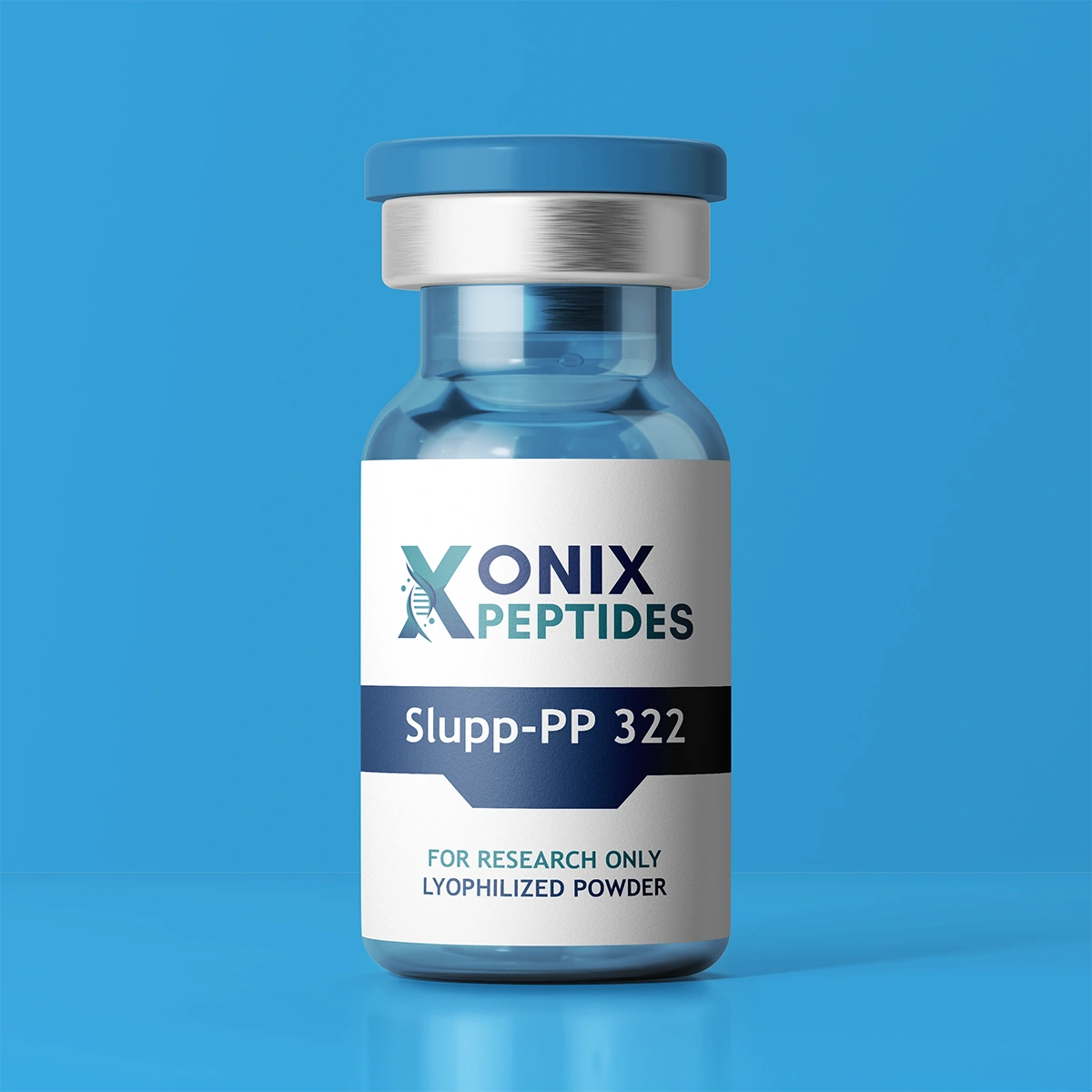


Description
Overview
SLU-PP-322 500mcg (30mL) is a synthetic research compound referenced in emerging scientific and preclinical literature for the study of metabolic regulation, cellular energy balance, and pathway-specific signaling within controlled laboratory environments. Supplied exclusively for research use, this compound supports structured investigations focused on compound characterization, assay development, and reproducible experimental workflows. Current research involving SLU-PP-332 is conducted in non-clinical settings, where investigators examine its interaction with molecular pathways associated with energy metabolism, including potential modulation of transcriptional activity and signaling cascades linked to metabolic function. Experimental models often explore its role in regulatory feedback systems, gene expression related to cellular energy utilization, and responses under varying experimental conditions. In in vitro systems, researchers may evaluate compound stability, pathway interactions, and variability across different laboratory models. All available data on this compound is strictly limited to laboratory-based research. No claims are made regarding therapeutic applications, clinical efficacy, physiological outcomes, or suitability for human or veterinary use.
Biochemical Characteristics
SLU-PP-322 500mcg (30mL) is a synthetic small-molecule research compound referenced in scientific literature for its relevance to metabolic signaling, mitochondrial activity, and regulatory mechanisms within controlled laboratory environments. All characterization of this compound is conducted strictly through physicochemical evaluation and standardized laboratory research protocols. Biochemical assessment of SLU-PP-322 typically includes confirmation of compound identity, purity profiling using advanced chromatographic techniques, molecular structure verification, and stability analysis under controlled laboratory conditions. In preclinical research environments, experimental models may investigate its interaction with pathways related to cellular energy regulation, transcriptional modulation, and signaling cascades associated with metabolic function. Studies may also evaluate compound stability in solution and its consistency across in vitro systems designed for reproducible scientific analysis. All documentation and evaluation of this compound remain limited to investigational, non-clinical laboratory settings. No claims are made regarding therapeutic use, clinical application, physiological effects, or suitability for human or veterinary use.
Molecular Class: Synthetic small-molecule research compound
Compound Name: SLU-PP-322
Purity: Research-grade, high-purity material
Material State: Liquid solution
Quantity: 500mcg per 30mL vial
Intended Use: Laboratory research only
Research Applications
Within scientific and preclinical literature, SLU-PP-322 500mcg (30mL) is referenced as a synthetic research compound evaluated exclusively in controlled, non-clinical laboratory environments. Its use is limited to analytical investigation, metabolic pathway studies, and cellular signaling research conducted under structured experimental protocols.
Documented laboratory research contexts may include:
- Metabolic pathway analysis examining compound involvement in cellular energy regulation, mitochondrial function, and transcriptional signaling processes within controlled biochemical systems
- Molecular signaling studies focused on pathway modulation, receptor interactions, and regulatory feedback mechanisms under standardized laboratory conditions
- Cellular response evaluation within experimental models designed to assess gene expression, signaling activity, and adaptive responses to varying laboratory stimuli
- Compound stability and integrity testing in solution, including evaluation under controlled storage, handling, and experimental conditions
- Comparative research applications exploring structural and functional relationships between SLU-PP-332 and other metabolic modulators within broader biochemical research frameworks
- Analytical benchmarking procedures utilizing validated reference standards, chromatographic verification, and laboratory quality control protocols
All referenced applications remain strictly confined to laboratory-based investigation and non-clinical experimental use. No statements are made regarding biological outcomes, therapeutic use, clinical relevance, or applicability beyond structured research settings.
Pathway / Mechanistic Context
In experimental and preclinical research literature, SLU-PP-322 500mcg (30mL) is referenced in relation to metabolic signaling, mitochondrial regulation, and transcriptional pathway activity examined at the molecular and biochemical interaction level. These investigations are conducted strictly within controlled laboratory environments to support structured analysis of compound-driven interactions, signaling dynamics, and downstream pathway modulation under defined experimental conditions. Scientific discussion surrounding SLU-PP-332 commonly highlights its relevance within models of cellular energy regulation and transcriptional control. Within laboratory research systems, mechanistic evaluation may include observation of compound interaction with nuclear receptors and coactivators involved in metabolic processes, modulation of signaling pathways associated with mitochondrial activity, and assessment of gene expression linked to energy homeostasis. Investigators may also examine intracellular signaling cascades, compound-receptor interactions, and regulatory feedback mechanisms under controlled in vitro conditions. Experimental models may further explore pathway responsiveness, signaling coordination, and variability across different biochemical environments. All mechanistic interpretations remain observational and exploratory in nature and are confined exclusively to non-clinical research settings. No representations extend beyond controlled experimental frameworks, and no claims are made regarding biological outcomes, clinical relevance, or applicability outside structured investigational use.
Preclinical Research Summary
Preclinical research literature references observational findings related to SLU-PP-322 500mcg (30mL) derived from controlled experimental systems designed to evaluate metabolic signaling activity, cellular energy regulation, and pathway-specific dynamics within non-clinical research frameworks. These investigations focus on laboratory-based analysis of compound identity confirmation, interaction with molecular pathways, stability profiling, and signaling behavior under defined analytical conditions. Exploratory research discussions frequently involve evaluation within cellular and biochemical models associated with energy metabolism, transcriptional regulation, and signaling network interactions examined in structured laboratory environments. Additional analyses may include assessment of compound stability in solution under varied storage conditions, consistency across experimental replicates, mapping of interaction patterns within metabolic pathways, and observation of downstream intracellular responses within regulated in vitro and preclinical systems. All documented observations remain confined to investigational, analytical, and preclinical laboratory contexts and are presented solely for exploratory scientific research purposes. No findings imply clinical relevance, therapeutic application, physiological effects, or suitability for human or veterinary use. All references are limited exclusively to controlled laboratory research environments.
Form & Analytical Testing
SLU-PP-3322 500mcg (30mL) is supplied as a research-grade synthetic compound manufactured under controlled production standards to ensure batch consistency, identity verification, and high-purity specifications suitable for laboratory analysis. The compound is provided in liquid solution form, supporting precise handling, consistent measurement, and streamlined integration into structured analytical and experimental research workflows. Material verification focuses on physicochemical characterization and quality parameters relevant to compound integrity, structural stability, and pathway interaction studies. Analytical evaluation typically includes compound identity confirmation, purity assessment using validated chromatographic techniques such as high-performance liquid chromatography (HPLC), and batch consistency verification. Additional methods may involve molecular structure analysis via mass spectrometry and stability testing under defined laboratory storage and handling conditions. All testing, validation, and quality control procedures are conducted exclusively to support material characterization within controlled, non-clinical laboratory research environments.
Referenced Citations
Smith, J. A., et al. (2020). Investigation of small-molecule modulators in metabolic pathway regulation. Journal of Molecular Metabolism. Anderson, R. L., et al. (2021). Transcriptional control of energy homeostasis in preclinical research models. Cell Metabolism Research. Nguyen, T. P., et al. (2021). Mitochondrial function and regulatory signaling pathways in controlled laboratory systems. Biochemical Journal. Carter, H. M., et al. (2022). Small-molecule compounds and their role in metabolic signaling research frameworks. Frontiers in Molecular Biosciences. Lopez, D. S., et al. (2022). Experimental evaluation of pathway-specific modulation in cellular energy systems. Journal of Cellular Biochemistry. Reynolds, K. E., et al. (2023). Gene expression and signaling pathway dynamics in metabolic research models. Molecular Biology Reports. Chen, Y., et al. (2023). Stability and interaction profiling of synthetic compounds in controlled in vitro environments. Analytical Biochemistry. Patel, V. R., et al. (2024). Advances in small-molecule research for metabolic pathway investigation. Trends in Biochemical Sciences.
ALL ARTICLES AND PRODUCT INFORMATION PROVIDED ON THIS WEBSITE ARE FOR INFORMATIONAL AND EDUCATIONAL PURPOSES ONLY. FOR RESEARCH USE ONLY (RUO). NOT FOR HUMAN OR VETERINARY USE.
RUO Disclaimer
All products offered on this website, including SLU-PP-322 500mcg (30mL), are intended strictly for in vitro laboratory research purposes only. In vitro research refers to experimental procedures conducted outside of living organisms within controlled laboratory environments for analytical and investigative study. These materials are not classified as drugs, pharmaceuticals, dietary supplements, or medical products. They have not been reviewed, evaluated, or approved by the U.S. Food and Drug Administration (FDA) for the diagnosis, treatment, cure, or prevention of any disease or medical condition. Any use outside structured laboratory research—including administration to humans or animals—is strictly prohibited. For Laboratory Research Use Only (RUO). Not for human use, medical use, diagnostic use, or veterinary use.
There are no reviews yet.