


Description
Overview
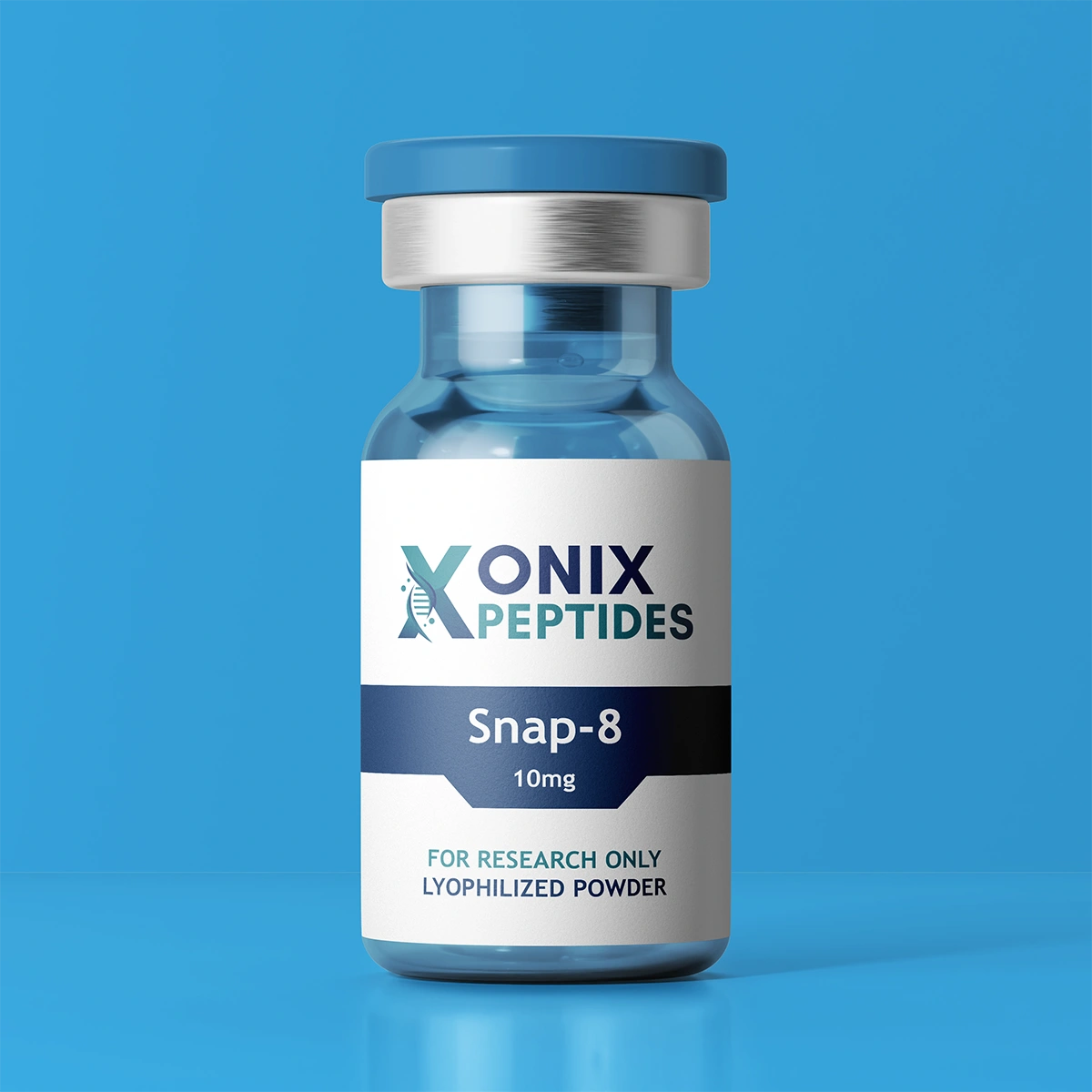
Snap-8 is a synthetic octapeptide supplied as a research material and referenced in scientific and supplier literature for its relevance in neuromuscular signaling–related research frameworks. It is examined strictly within controlled laboratory environments where peptide structure, interaction behavior, and molecular characteristics are evaluated as part of experimental study design. Published discussions of Snap-8 are limited to non-clinical research contexts, including laboratory-based analytical models and exploratory preclinical investigations. Reported observations focus on peptide behavior and signaling-related mechanisms under experimental conditions, without extension beyond the research setting. No representations or claims are made regarding therapeutic purpose, clinical performance, or application involving humans or animals. Snap-8 remains designated solely as a research-use material intended for investigational and analytical study.
Biochemical Characteristics
Snap-8 is a synthetic research peptide examined in laboratory studies for its molecular behavior within neuromuscular signaling–related research models. Within experimental systems, investigations focus on peptide–protein interaction dynamics and signaling-associated pathways as part of controlled biochemical analysis. These evaluations are limited to structural and mechanistic observation under defined research conditions. Biochemical research involving Snap-8 centers on molecular-level characterization, including pathway mapping, interaction profiling, and analytical validation conducted exclusively in non-clinical laboratory environments. All findings are confined to in vitro and preclinical research frameworks, without reference to clinical, diagnostic, or therapeutic application.
Molecular Classification: Synthetic research peptide
Net Content: 10 mg
Purity: ≥99% (research-grade)
Physical Form: Lyophilized powder
Designation: For laboratory research use only (RUO)
Research Applications
In scientific and supplier literature, Snap-8 is referenced as a synthetic research peptide examined within controlled laboratory frameworks focused on neuromuscular signaling–related research models. Its use is limited to experimental systems designed to evaluate peptide characteristics, interaction patterns, and signaling-associated behavior at the molecular level. Documented research contexts include: Laboratory-based evaluation of neuromuscular signaling pathways in cellular models Peptide–protein interaction profiling within in vitro assay systems Experimental analysis of signaling-associated peptide behavior under controlled conditions Molecular pathway mapping related to signal transmission in non-clinical models Controlled studies examining peptide signaling dynamics for analytical and exploratory purposes All referenced applications are confined strictly to non-clinical laboratory research environments. Snap-8 is designated exclusively for investigational use and is not associated with diagnostic, therapeutic, or human-related applications.
Pathway / Mechanistic Context
Within experimental research literature, Snap-8 is discussed in relation to neuromuscular signaling–associated pathways examined for their role in signal transmission and intracellular communication processes. These pathways are evaluated in controlled laboratory systems to observe peptide-related interactions and structural associations within defined signaling frameworks. Additional exploratory observations reference Snap-8 in studies involving neurotransmitter-associated signaling complexes and broader cellular communication networks. All mechanistic descriptions remain analytical and observational in nature, focusing on pathway mapping and interaction context rather than functional outcomes. All referenced pathway discussions are strictly limited to non-clinical laboratory research environments and are presented solely for investigational and scientific characterization purposes.
Preclinical Research Summary
Preclinical research references describe Snap-8–related observations within controlled cellular and experimental model systems used to examine neuromuscular signaling frameworks and peptide-associated molecular behavior. These investigations emphasize analytical evaluation of signaling markers and intracellular communication pathways under defined laboratory conditions. Additional exploratory studies assess pathway-level signaling patterns and molecular interaction contexts relevant to neuromuscular peptide research in non-clinical environments. All reported observations are confined strictly to preclinical research systems and are presented for scientific characterization purposes only. No findings suggest clinical relevance, therapeutic intent, or application involving humans or animals. Snap-8 remains designated exclusively as a research-use material for laboratory-based investigation.
Form & Analytical Testing
Snap-8 is supplied as a research-grade peptide material intended exclusively for laboratory investigation. Peptide identity and purity are evaluated using established analytical methodologies standard to peptide research, including chromatographic separation techniques and mass spectrometric analysis to verify composition and structural integrity. All assessments are performed within controlled, non-clinical research environments and are limited to material characterization purposes only.
Referenced Citations
Blanes-Mira C, et al. “A synthetic hexapeptide (Argireline) with antiwrinkle activity.” International Journal of Cosmetic Science, 2002. NCBI – SNAP-25 Protein Overview. Background reference for SNARE complex–related neuromuscular signaling research. Rothman JE. “Mechanisms of intracellular protein transport.” Nature, 1994. Foundational reference for SNARE-mediated signaling pathways. Alberts B, et al. Molecular Biology of the Cell, 4th Edition. Section on vesicle docking and SNARE protein complexes.
ALL ARTICLES AND PRODUCT INFORMATION PROVIDED ON THIS WEBSITE ARE FOR INFORMATIONAL AND EDUCATIONAL PURPOSES ONLY.
RUO Disclaimer
All products available on this website are supplied strictly as research-use materials intended for in vitro laboratory investigation only. These materials are not drugs, medications, dietary supplements, or medical products, and they have not been evaluated or approved by the FDA for the diagnosis, treatment, cure, or prevention of any disease or medical condition. These products are designated exclusively for use in qualified research environments and must not be introduced into humans or animals under any circumstances. For Research Use Only (RUO). Not for human, medical, diagnostic, or veterinary use.
There are no reviews yet.